 Posted:2025-12-17
 Views:295
The service life of wire ropes used in cranes is closely related to the groove diameter of sheaves and drums. The size of the groove diameter directly affects the performance of the wire rope. Therefore, regular inspection of the groove diameter of sheaves and drums is particularly important.
Matching requirements for wire rope and groove diameters for cranes
According to the standard GB/T 29086-2012 Steel wire ropes – Safety – Use and maintenance, for crane wire ropes, the groove diameter of sheaves and drums should be controlled within a range of 5% to 10% larger than the nominal diameter of the wire rope. A groove diameter that is too large or too small will affect the performance of the wire rope and consequently its service life. The specific effects are described below:
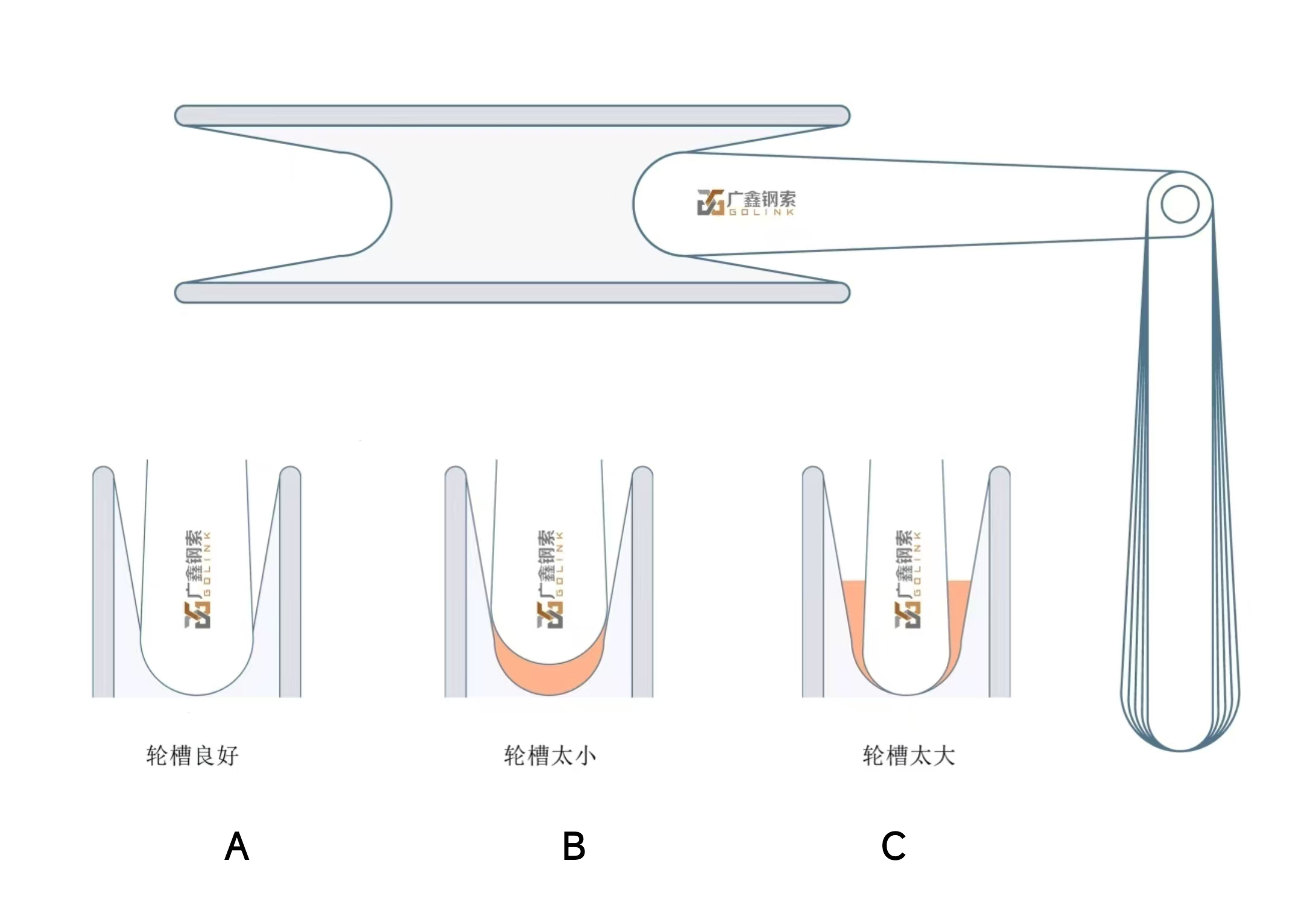
Groove diameter too small
When the wire rope enters the groove, the movement of the strands or wires is restricted, resulting in挤压摩擦 (compression and friction), which causes structural damage to the wire rope, leading to premature wire breakage and deformation, while also accelerating groove wear.
Groove diameter too large
The groove cannot adequately support the wire rope and creates high local stress on the rope, causing premature wire failure.
Measurement of groove diameter
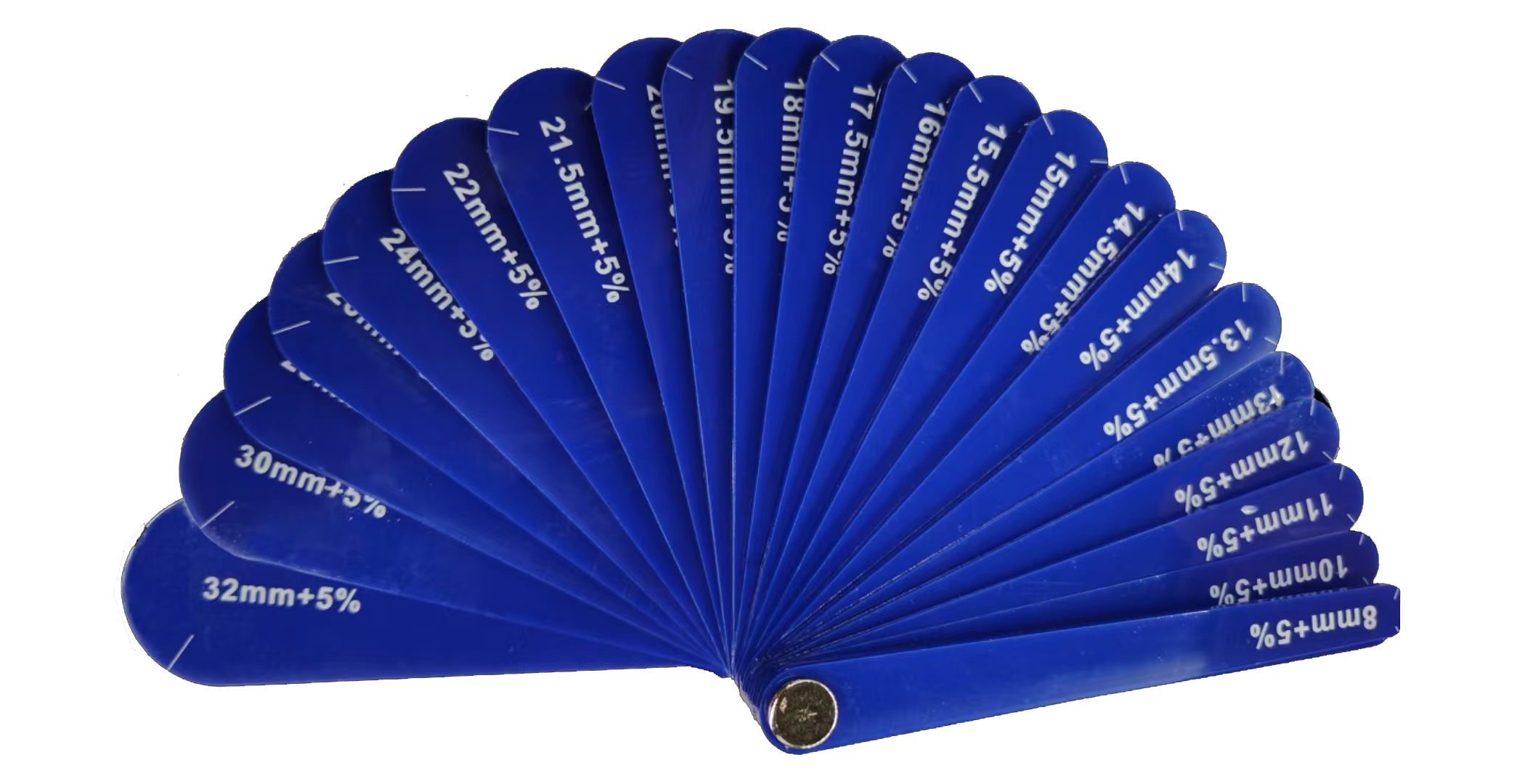
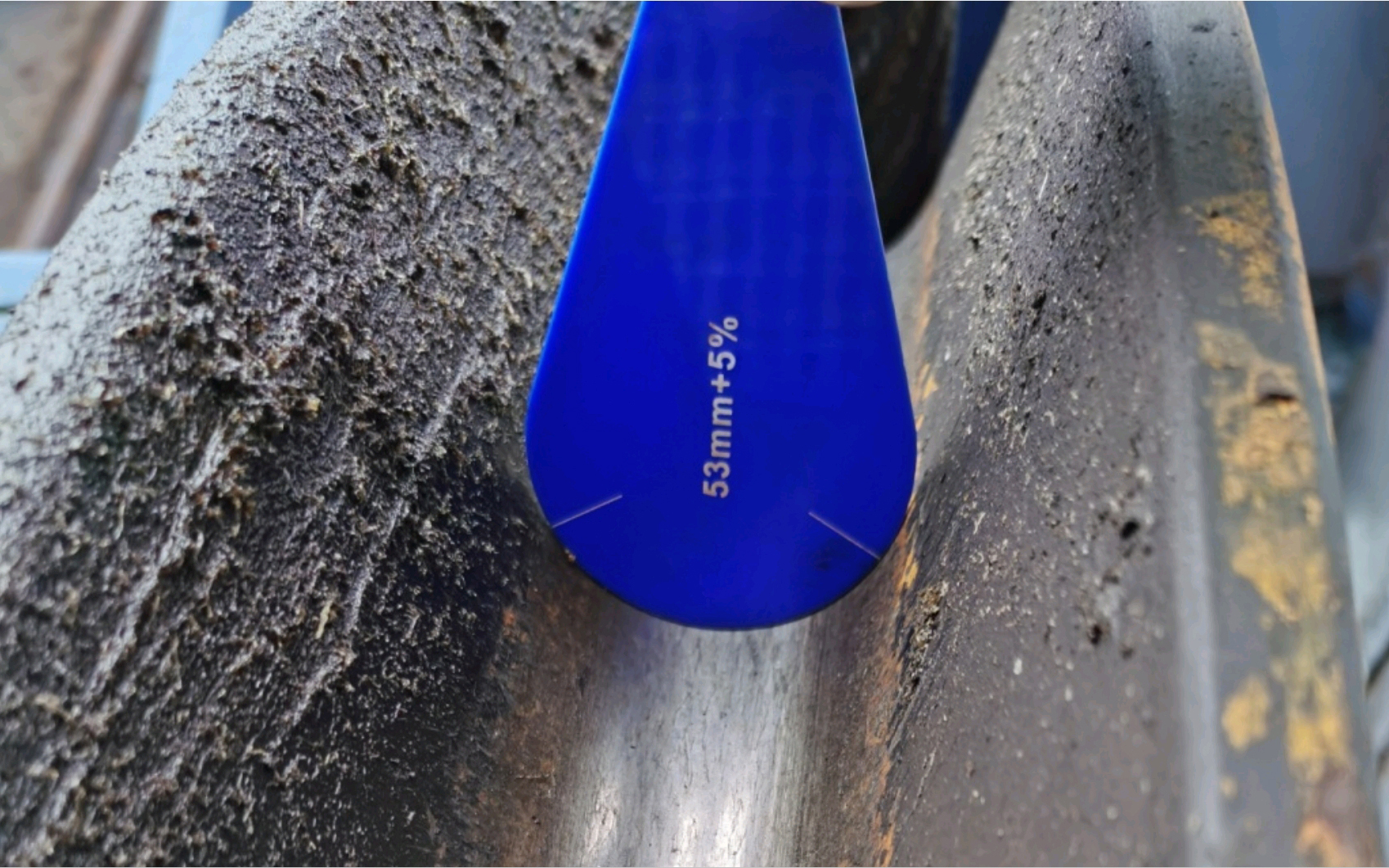
The groove diameter should be measured using a radius gauge (R-gauge) or a sheave measuring tool (Figure 1). The R-gauge has semi-circular arcs of various diameters on one end. By checking the fit between the semi-circular arc and the rope groove, it can be verified whether the groove meets the standard requirements. The method for inspecting the groove diameter of sheaves and drums is as follows: