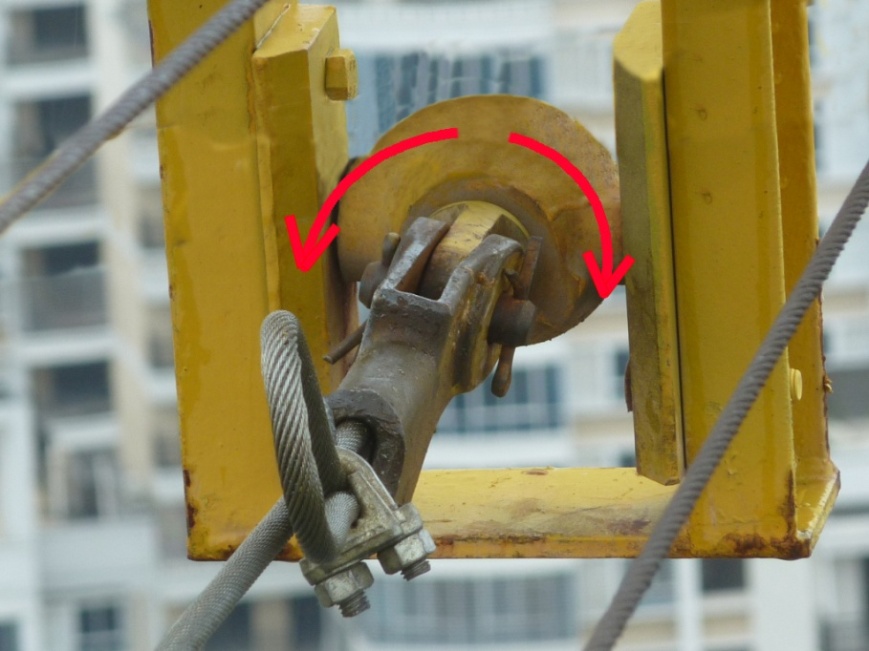
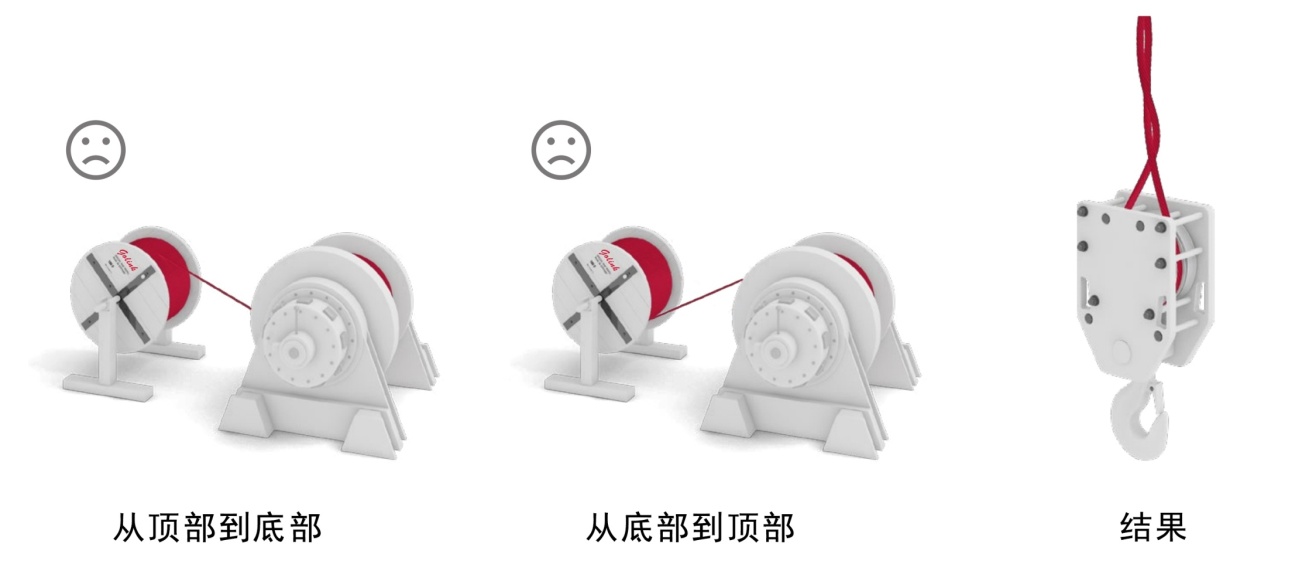
Figure 5: Reverse bending rope winding
News Center
40 years dedicated to steel wire ro

 Posted:2026-03-03
 Views:285
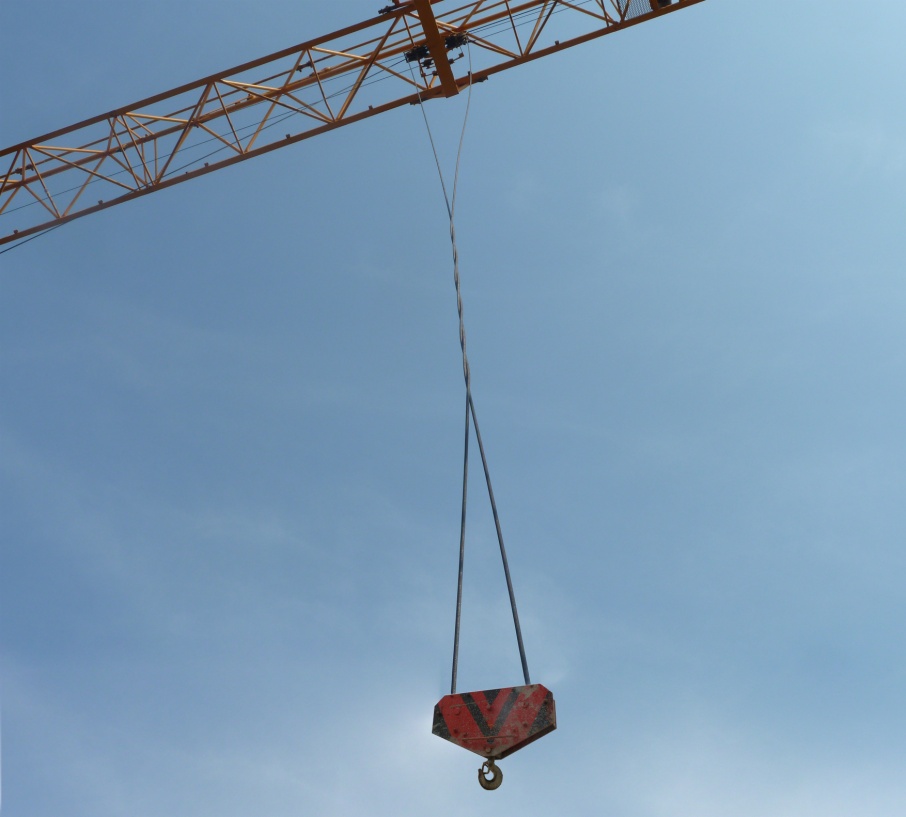
A tower crane is commonly known as a type of crane used for lifting goods at height during various construction processes. Under certain special circumstances, the hoist wire rope of a tower crane may accumulate torsional stress, ultimately causing the hook to rotate and the wire rope to become twisted or kinked (Figure 1).
Cause analysis of hook rotation
Incorrect selection of wire rope construction
Due to the high lifting height of tower crane hoist ropes, non-rotation-resistant wire ropes with 6 or 8 strands (i.e., single-layer strand ropes) should not be selected; otherwise, hook rotation will occur.
Rotation-resistant wire rope constructions, such as 35W×7 (K7), 40W×7, 15×K7 (Figure 2), should be chosen, as they can prevent structural rotation of the wire rope under load.
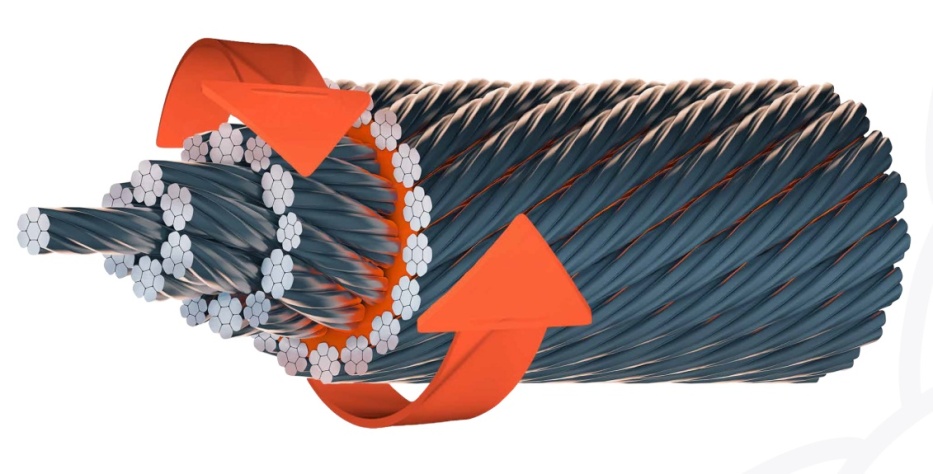
Figure 2: 35W×7 construction wire rope
2.Torsional stress introduced during wire rope installationDuring the installation of a new rope, torsional stress may be introduced due to incorrect operation.
When using an old rope to pull a new rope into place, if the old and new ropes are rigidly connected (e.g., by welding) as shown in Figure 3, any residual torsional stress in the old rope may be transmitted to the new rope. This can lead to an accumulation of torsional stress and ultimately cause hook rotation.
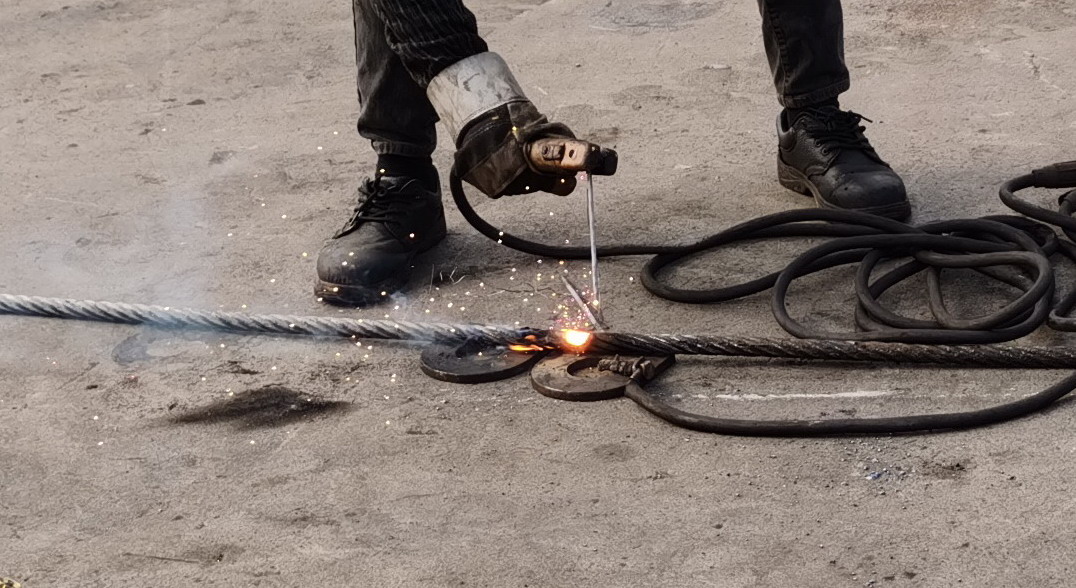
Figure 3: Incorrect connection method
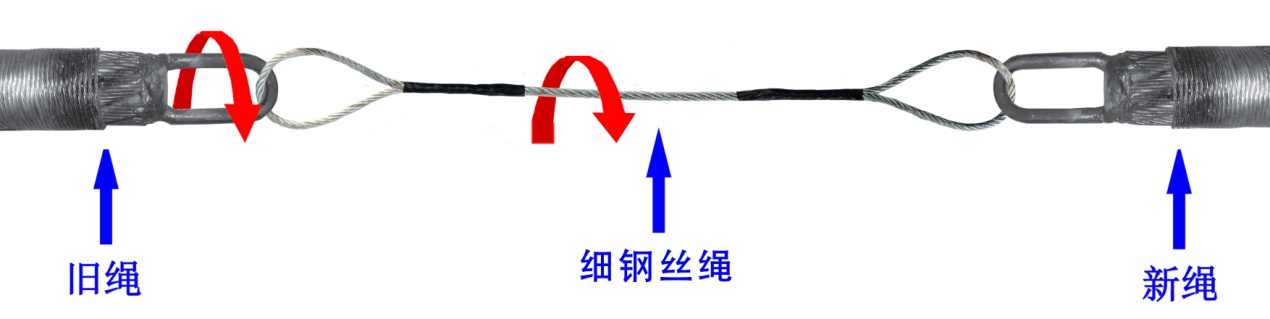
Figure 4: Correct connection method
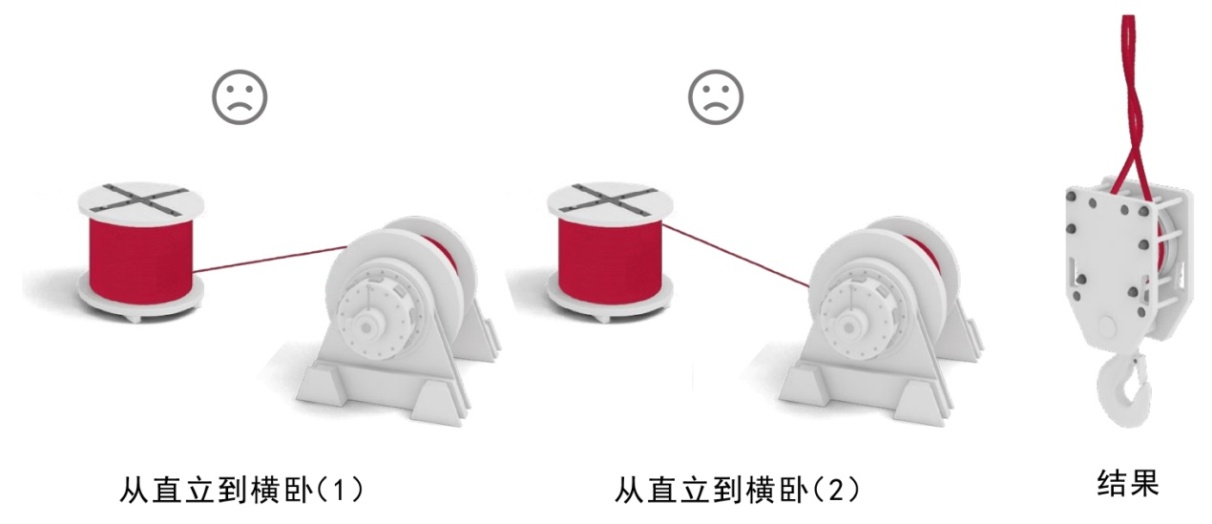
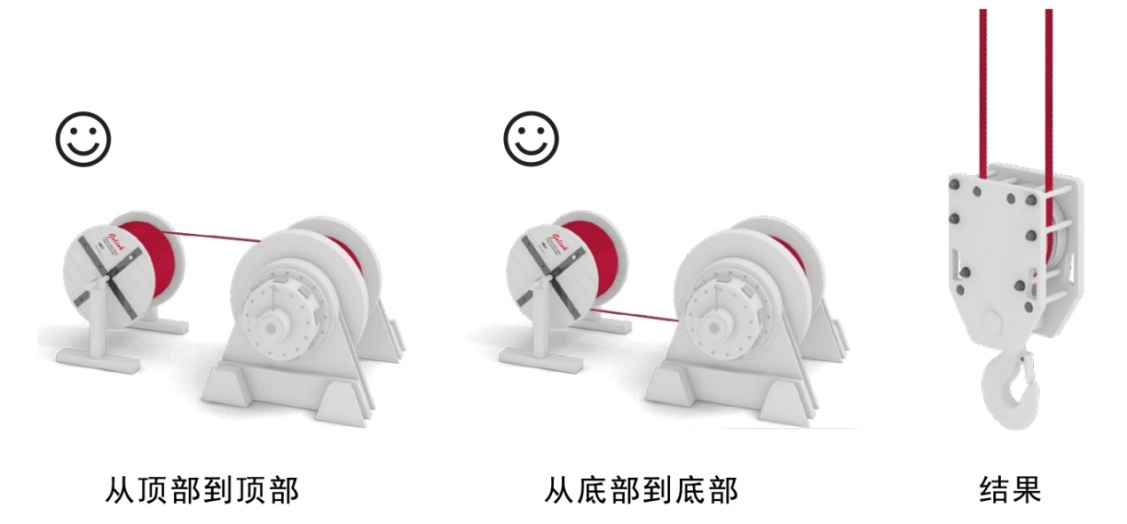
2.Using incorrect paying-out methods when transferring the wire rope from the reel to the drum, such as reverse bending (Figure 5) or changing from vertical to horizontal orientation (Figure 6), can introduce torsional stress and may cause hook rotation.
3. Equipment factors
Equipment-related factors of the hoisting device itself, such as sheave grooves becoming worn and resulting in a diameter that is too small to match the new rope, or an excessively large fleet angle, may cause the accumulation of torsional stress, which in turn leads to hook rotation.
Before installing a new rope, all sheave grooves should be inspected to ensure that the groove diameter is compatible with the new rope. If any groove is found to have an non-compliant diameter, it should be replaced promptly.
Methods for releasing torsional stress in wire rope
When hook rotation occurs after the wire rope has been installed or has been in use for a period of time, it indicates that there is significant torsional stress in the wire rope. In such cases, the torsional stress in the wire rope should be released. The two common methods are as follows:
Operate the trolley and hook of the tower crane. As shown in Figure 2, first perform 3 to 4 cycles of operation following the black dashed line and arrow direction, and then perform another 3 to 4 cycles following the red dashed line and arrow direction. This will transfer part of the torsional stress in the wire rope to the swivel (W), thereby resolving the hook rotation issue.
Note: If the above operation does not completely solve the problem, repeat the cycles several more times until a satisfactory result is achieved.
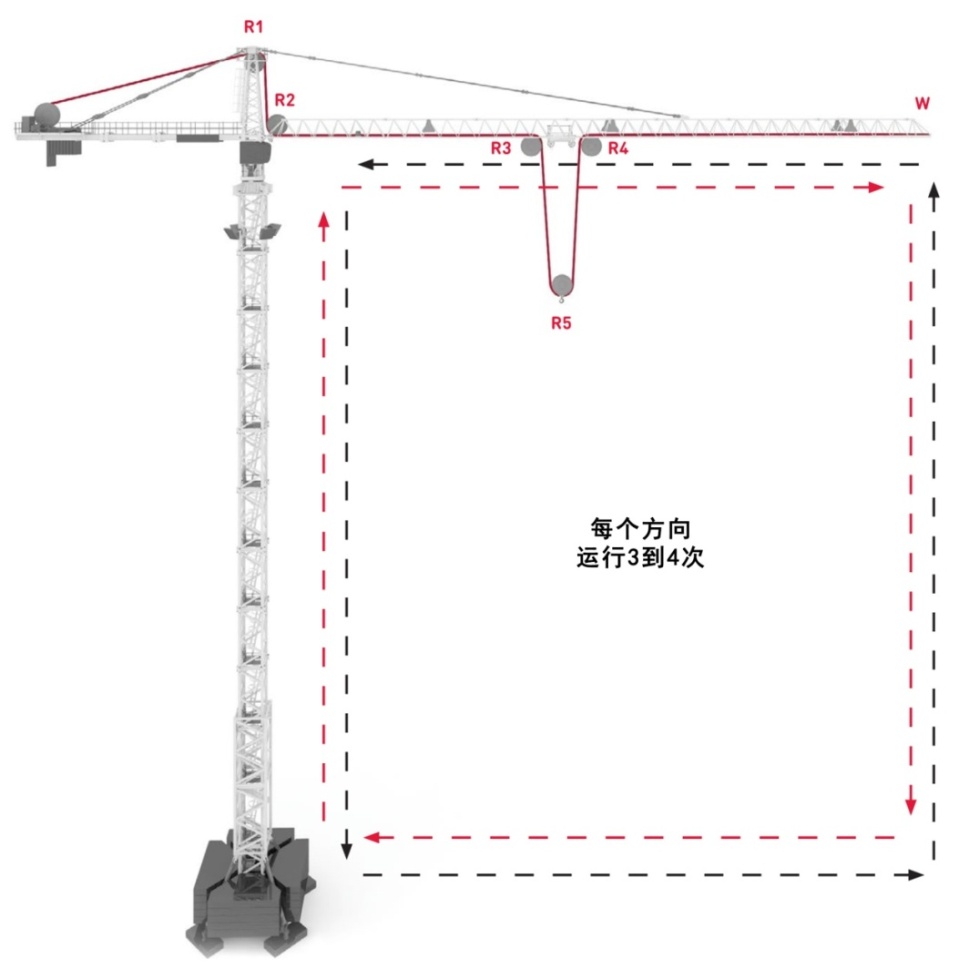
Figure 8: Operation method
Operate the trolley to move to the end of the jib, lower the hook to the ground, and keep the hoist rope in a slack condition. Based on the direction of hook rotation, rotate the fixed rope end in the opposite direction to introduce reverse torque, and finally lock the swivel to prevent further rotation. It is recommended not to rotate more than one full turn (360°) at a time, as excessive rotation may cause structural damage to the wire rope.
After applying the torque, the hook must be raised and lowered several times to transfer the torque to the hook sheave and distribute it evenly. This process may need to be repeated several times until the hook returns to normal.